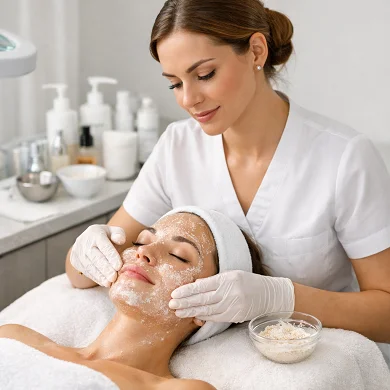
Not all facials are created equal — and choosing the wrong one for your skin can mean wasted money, missed results, or even irritation. Understanding the types of facial treatments available is the first step toward making an informed skincare decision that actually works for your unique complexion.
Whether you’re a first-timer walking into a spa or a skincare enthusiast looking to level up your routine, this complete guide breaks down every major facial category, how each one works, which skin types benefit most, and how to confidently choose the right treatment for your goals.
Why Understanding Types of Facial Treatments Matters for Your Skin
With dozens of facial treatments available today — from basic cleansing facials to advanced chemical peels and oxygen infusions — the options can feel overwhelming. Many people book a facial based on price or availability rather than skin compatibility, which is one of the most common reasons they don’t see results.
Knowing the different types of facials helps you communicate clearly with your esthetician, set realistic expectations, and build a long-term skincare plan that delivers consistent improvement. It also ensures you’re investing your time and money into treatments that target your specific skin concerns — whether that’s acne, dullness, aging, or dehydration.
Common Misconceptions About Facials
One of the biggest myths in skincare is that all facials work the same way. Many people assume a “facial” means the same thing at every salon or spa — it doesn’t. A basic cleansing facial and a microdermabrasion facial are vastly different in technique, depth, and results.
Another common misconception is that facials are purely a luxury. In reality, regular professional facial procedures are a clinically supported approach to maintaining skin health, managing acne, slowing visible aging, and improving overall skin texture. Think of them less like a treat and more like a scheduled maintenance appointment for your skin.
Types of Facial Treatments You Need to Know Before Booking
There are five primary categories of facial treatments, each serving a different purpose and targeting different skin concerns. Understanding these broad categories makes it much easier to narrow down which facial type is right for you.
Cleansing Facials
A cleansing facial — often called a classic facial or deep cleansing facial — is the most fundamental type of facial treatment. It focuses on thoroughly purifying the skin by removing surface impurities, excess oil, and clogged pores through a combination of steaming, exfoliation, and extraction.
This is the ideal starting point for most people, especially beginners. It suits nearly all skin types and serves as the foundation upon which more advanced treatments are built. If you’ve never had a professional facial before, a cleansing facial is the smartest first step.
Best for: All skin types, especially oily and acne-prone skin.
Key benefit: Deep pore purification and a clearer complexion
Exfoliating Facials
Exfoliating facials go a step further than standard cleansing by actively removing the layer of dead skin cells sitting on the surface. This category includes treatments like microdermabrasion, enzyme facials, and chemical peel facials — all of which use different mechanisms to accelerate the skin’s natural cell turnover process.
The result is a smoother texture, reduced hyperpigmentation, and a noticeably brighter complexion. Exfoliating facials are particularly effective for dull, uneven, or rough skin that hasn’t responded well to topical products alone.
Best for: Dull, uneven, or rough skin; aging skin; mild hyperpigmentation.
Key benefit: Smoother texture and enhanced radiance
Hydrating Facials
A hydrating facial is designed specifically to replenish moisture deep within the skin’s layers. Using ingredients like hyaluronic acid, glycerin, ceramides, and peptides, these treatments restore the skin’s natural moisture barrier and leave it looking plump, dewy, and refreshed.
The HydraFacial — one of the most popular hydrating facial treatments globally — combines cleansing, exfoliation, and intense hydration in a single session, making it one of the most versatile options available. Hydrating facials are particularly effective during winter months when skin tends to lose moisture rapidly.
Best for: Dry, dehydrated, or sensitive skin; all skin types, seasonally.
Key benefit: Restored moisture balance and lasting plumpness
Anti-Aging Facials
Anti-aging facials are formulated to target the visible signs of skin aging — fine lines, wrinkles, loss of firmness, and uneven tone. These treatments typically incorporate ingredients such as retinol, collagen-boosting peptides, Vitamin C, and growth factors, alongside techniques like facial massage and lymphatic drainage that stimulate circulation and promote skin renewal.
Many anti-aging facials also use technologies like LED light therapy or microcurrent stimulation to further enhance collagen production and firm the skin. While no facial can permanently reverse aging, consistent anti-aging treatments can significantly slow its visible progression.
Best for: Mature skin, skin showing early signs of aging (late 20s onward).
Key benefit: Reduced fine lines and improved skin firmness
Specialty Facials
Specialty facials are a broad and rapidly growing category that includes treatments using unique ingredients, technologies, or techniques not found in standard facial menus. Popular examples include:
- Brightening facials — use Vitamin C, kojic acid, or niacinamide to target pigmentation and uneven skin tone
- Oxygen facials — infuse pressurized oxygen and serums directly into the skin for instant radiance
- Herbal facials — use plant-based botanical ingredients to soothe, heal, and balance the skin
- Gold facials — incorporate 24-karat gold to stimulate circulation and add luminosity
- LED light therapy facials — use specific light wavelengths to target acne, inflammation, or aging
These treatments are often more expensive than standard facials but deliver highly targeted results for specific skin concerns.
Best for: Skin-specific concerns like pigmentation, dullness, or sensitivity.
Key benefit: Targeted, results-driven treatment for specific goals
Detailed Breakdown of Types of Facial Treatments
How Each Facial Works
Understanding the mechanism behind each facial helps you appreciate why certain treatments outperform others for specific concerns.
- Cleansing facials work by using steam to open pores, followed by manual or tool-assisted extraction to remove congestion, and a soothing mask to calm the skin afterward.
- Exfoliating facials work by either physically buffing the skin’s surface (microdermabrasion) or chemically dissolving the bonds between dead skin cells (AHA/BHA peels and enzyme treatments).
- Hydrating facials work by delivering humectants and occlusives deep into the skin through serums, masks, and massage, while simultaneously repairing the skin’s moisture barrier.
- Anti-aging facials work by stimulating collagen synthesis through active ingredients, massage techniques, and technology-assisted treatments that signal the skin to repair and regenerate.
- Specialty facials work through their unique delivery systems — pressurized oxygen, specific light wavelengths, or concentrated botanical actives — to achieve results that standard facials cannot replicate.
Best Skin Type for Each Facial
Matching your skin type to the correct facial procedure is critical for achieving results without causing irritation or worsening existing concerns.
| Facial Type | Downtime | Results Speed | Best For |
| Cleansing Facial | None | Moderate | Maintenance |
| Exfoliating Facial | Low | Fast | Texture & dullness |
| Hydrating Facial | None | Instant | Dry skin |
| Anti-aging Facial | Low | Gradual | Wrinkles |
| Specialty Facial | Varies | Fast | Target concerns |
| Brightening Facial | None | Fast | Uneven tone & pigmentation |
| Oxygen Facial | None | Instant | Dull, tired-looking skin |
| Herbal Facial | None | Gradual | Sensitive & acne-prone skin |
For a deeper dive into skin-type-specific recommendations, read our guide on Facial Treatments for Every Skin Type.
Pros and Cons
Each facial type has its own advantages and limitations. Here’s an honest breakdown:
| Facial Types | Pros | Cons |
| Cleansing Facial | Suitable for all skin types; gentle; affordable | Results are less dramatic than those of advanced treatments. |
| Exoliating Facial | Highly effective for texture and tone; visible results quickly. | May cause temporary redness or sensitivity; not suitable for very sensitive skin |
| Hydrating Facial | Instantly plumping and refreshing; safe for sensitive skin. | Results may not last as long without a consistent home care routine. |
| Anti-aging Facial | Targets multiple signs of aging simultaneously. | Often requires a series of sessions for best results; higher cost. |
| Specialty Facials | Highly targeted; often delivers faster, more dramatic results. | Premium pricing; availability varies by location. |
How to Choose the Right Types of Facial Treatments for Your Skin
Matching Facial Type to Your Skin Type
The single most important factor in choosing a facial is your skin type. Using a facial designed for oily skin on dry skin — or vice versa — can disrupt your skin’s natural balance and cause more harm than good.
- Oily or acne-prone skin → Deep cleansing facial or salicylic acid facial. Read our full guide on the best facial for acne for targeted recommendations.
- Dry skin → Hydrating or nutrient-rich facial. See our detailed guide for dry skin.
- Sensitive skin → Herbal or calming facial with hypoallergenic products
- Combination skin → Balanced facial with targeted zone treatment
- Mature or aging skin → Anti-aging facial with collagen-boosting ingredients
Matching Facial Type to Your Skin Concern
Beyond skin type, your specific concern should guide your facial choice:
- Dullness → Brightening or oxygen facial
- Acne and blackheads → Deep cleansing or salicylic acid facial
- Fine lines and wrinkles → Anti-aging or collagen facial
- Pigmentation and dark spots → Chemical peel or Vitamin C facial
- Dehydration → HydraFacial or hydrating facial
- Overall skin maintenance → Classic cleansing facial every 4–6 weeks
Professional Consultation Tips
Before booking any types of facial treatments, a brief consultation with a licensed esthetician can save you from choosing the wrong treatment. Here’s how to make the most of it:
- Arrive with a clean face — no makeup — so the esthetician can assess your true skin condition
- List your current skincare products — some active ingredients like retinol or AHAs can make certain facials too intense
- Share your skin history — mention allergies, recent breakouts, or skin conditions like rosacea or eczema
- State your goals clearly — tell them whether you’re targeting a specific concern or looking for general maintenance
A skilled professional will always recommend the right facial procedure based on your assessment, not just the most expensive option on the menu.
Common Mistakes When Choosing Types of Facial Treatments
Include:
- Choosing based on price
- Ignoring skin type
- Over-exfoliating
- Not consulting professionals
How Often Should You Get Each Facial
Facial frequency depends on both the treatment type and your skin’s tolerance. As a general guide:
- Cleansing facials — every 4–6 weeks
- Exfoliating facials — every 4–6 weeks for mild; every 3 months for deeper peels
- Hydrating facials — every 3–4 weeks, especially in dry or cold seasons
- Anti-aging facials — every 4–6 weeks as part of an ongoing plan
- Specialty facials — varies; consult your esthetician
For a complete breakdown, read our expert guide on how often you should get a facial.
Professional vs At-Home Options
Professional facials deliver results that at-home treatments simply cannot replicate — primarily because licensed estheticians have access to stronger formulations, professional-grade equipment, and the clinical training to use them safely.
That said, a consistent at-home facial routine between professional appointments significantly extends your results. Think of professional facials as your deep treatment, and your home routine as daily maintenance. The two work best together, not as substitutes for each other.
For a full comparison, explore our guide on the facial treatments available professionally.
Conclusion
Understanding the types of facial treatments is the foundation of any smart, results-driven skincare plan. From the simplicity of a classic cleansing facial to the precision of a specialty brightening treatment, every facial type serves a purpose — and the right one for you depends entirely on your skin type, concerns, and goals.
Key takeaways from this guide:
- There are five main facial categories: cleansing, exfoliating, hydrating, anti-aging, and specialty
- Matching your facial to your skin type and concern is more important than choosing the most expensive option
- Professional consultation before booking ensures you get the most effective treatment for your skin
- Consistency matters — regular facials deliver far better results than occasional one-off treatments
- At-home care between sessions extends and maintains your professional facial results
Ready to take the next step? Explore our Ultimate Guide to the Best Facial Treatments to discover the top-rated professional treatments available today — and find the perfect match for your skin.
FAQs
Are specialty facials worth the cost?
For targeted skin concerns like pigmentation, severe dehydration, or advanced aging, specialty facials can absolutely justify their higher price point. However, for general skin maintenance, a classic or hydrating facial delivers excellent value.
What is the most popular facial treatment?
The HydraFacial is currently one of the most popular facial treatments worldwide, largely because it combines cleansing, exfoliation, and deep hydration in a single session with no downtime. It suits nearly all skin types, making it a top choice for both first-timers and skincare veterans.
Which facial is best for beginners?
A classic cleansing facial is the best starting point for beginners. It's gentle, universally suitable, and allows your esthetician to properly assess your skin before recommending more advanced treatments.
How long do facial results last?
Results vary by facial type. A cleansing facial typically keeps skin clear for 3–4 weeks. Hydrating facials can maintain plumpness for 1–2 weeks. More advanced treatments like chemical peels or microdermabrasion can deliver visible improvements for 4–6 weeks or longer. Consistent, regular treatments always produce better long-term results than sporadic sessions.
Is a chemical peel the same as an exfoliating facial?
Not exactly — a chemical peel facial is a type of exfoliating facial, but not all exfoliating facials are chemical peels. Exfoliating facials also include physical methods like microdermabrasion and enzyme treatments. While chemical peels use acids at varying concentrations.